Amazigh Vegetable Couscous
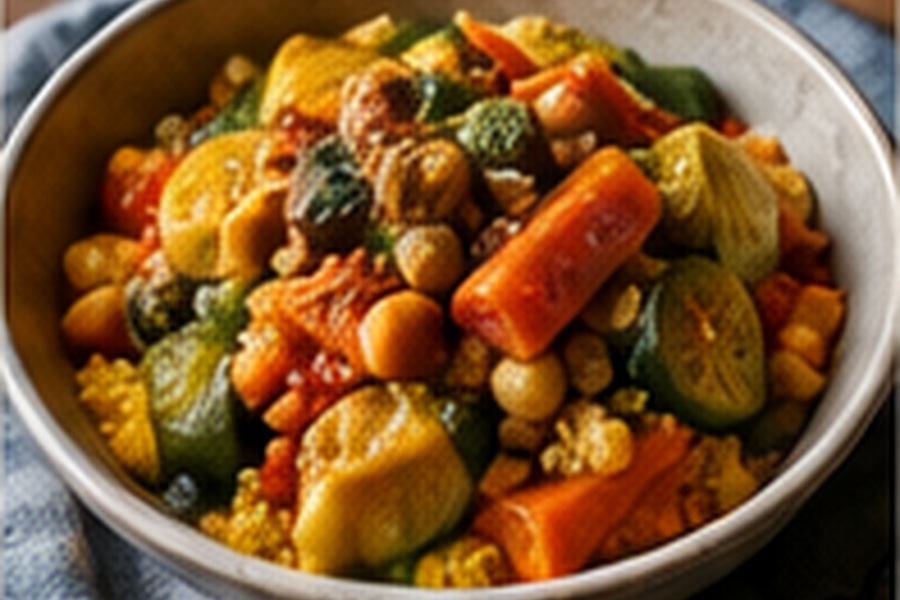
Fluffy couscous beneath chickpeas and vegetables simmered in a warmly spiced broth.
About this dish
Couscous belongs to a broad North African food tradition shared across communities and national borders, including deep Amazigh culinary traditions. The grain is traditionally rolled from semolina and steamed repeatedly rather than merely soaked once. This version keeps the vegetable-and-broth structure of a family-style couscous while using commercially prepared couscous for a practical home method.
For cooks who want to move closer to the traditional steaming technique, a couscoussier lets the grains steam over the aromatic stew below instead of absorbing a measured amount of liquid in a bowl.
A shared North African practice, not just a grain
In 2020 UNESCO inscribed the knowledge, know-how and practices surrounding couscous on the Representative List of the Intangible Cultural Heritage of Humanity through a joint nomination by Algeria, Mauritania, Morocco and Tunisia. UNESCO emphasizes not only the food itself but also the rolling and steaming techniques, specialized utensils, transmission of knowledge and the dish's role in solidarity, hospitality and shared meals.
The UNESCO documentation also stresses variation: vegetables, meats, grains and presentation change with region, season, landscape and household. That makes a single recipe useful as an entry point, not a universal template.
This recipe is a home adaptation inspired by Amazigh and wider Maghrebi couscous practices; it does not represent every regional or family style.
Preparation notes
Carrots, turnip and zucchini should remain recognizable after simmering. Small dice will disappear into the broth.
Zucchini cooks much faster than root vegetables. It should be tender but still hold its edges when served.
The best couscous feels light and separate. Use a fork or your fingertips to break up clumps before plating.
Ingredients & detailed method
Ingredients
- 2 cups couscous
- 2 tbsp olive oil, divided
- 1 large onion, sliced
- 2 carrots, cut into large batons
- 1 zucchini, cut into thick half-moons
- 1 turnip, cut into wedges
- 1 can chickpeas, drained and rinsed
- 2 tomatoes, chopped
- 4 cups vegetable stock
- 1 tsp turmeric
- 1 tsp ground ginger
- 1/2 tsp cinnamon
- Kosher salt and black pepper
- Fresh cilantro or parsley, for serving
Method
- 1.Prep by cooking time. Cut carrots and turnip into large pieces and keep the zucchini separate so it can be added later.
- 2.Start the onion. Heat 1 tablespoon olive oil over medium heat and cook the onion 5–7 minutes until translucent and beginning to soften.
- 3.Bloom the spices. Add turmeric, ginger and cinnamon and stir 30 seconds. Checkpoint: the spices should smell fragrant but should not darken or scorch.
- 4.Build the broth. Add tomatoes and cook 3–4 minutes until they begin breaking down. Add carrots, turnip, chickpeas and stock.
- 5.Simmer the roots. Cover partly and simmer 18–22 minutes. Checkpoint: a knife should enter the carrot and turnip with some resistance; they are not fully done yet.
- 6.Add zucchini. Stir in zucchini and simmer 8–10 minutes more. Season the broth with salt and pepper.
- 7.Check the vegetables. Checkpoint: all vegetables should be tender enough to cut with a fork while still holding their shape.
- 8.Prepare the couscous. Put couscous in a heatproof bowl with 1 tablespoon olive oil and 1/2 teaspoon salt. Pour over about 2 cups very hot broth, cover and stand 5 minutes.
- 9.Fluff thoroughly. Rake the couscous with a fork, lifting rather than pressing. If any dense clumps remain, rub them apart gently with clean fingertips.
- 10.Serve family-style. Mound couscous on a platter, arrange vegetables over and around it, and spoon enough broth over the grains to moisten without flooding them. Finish with herbs.